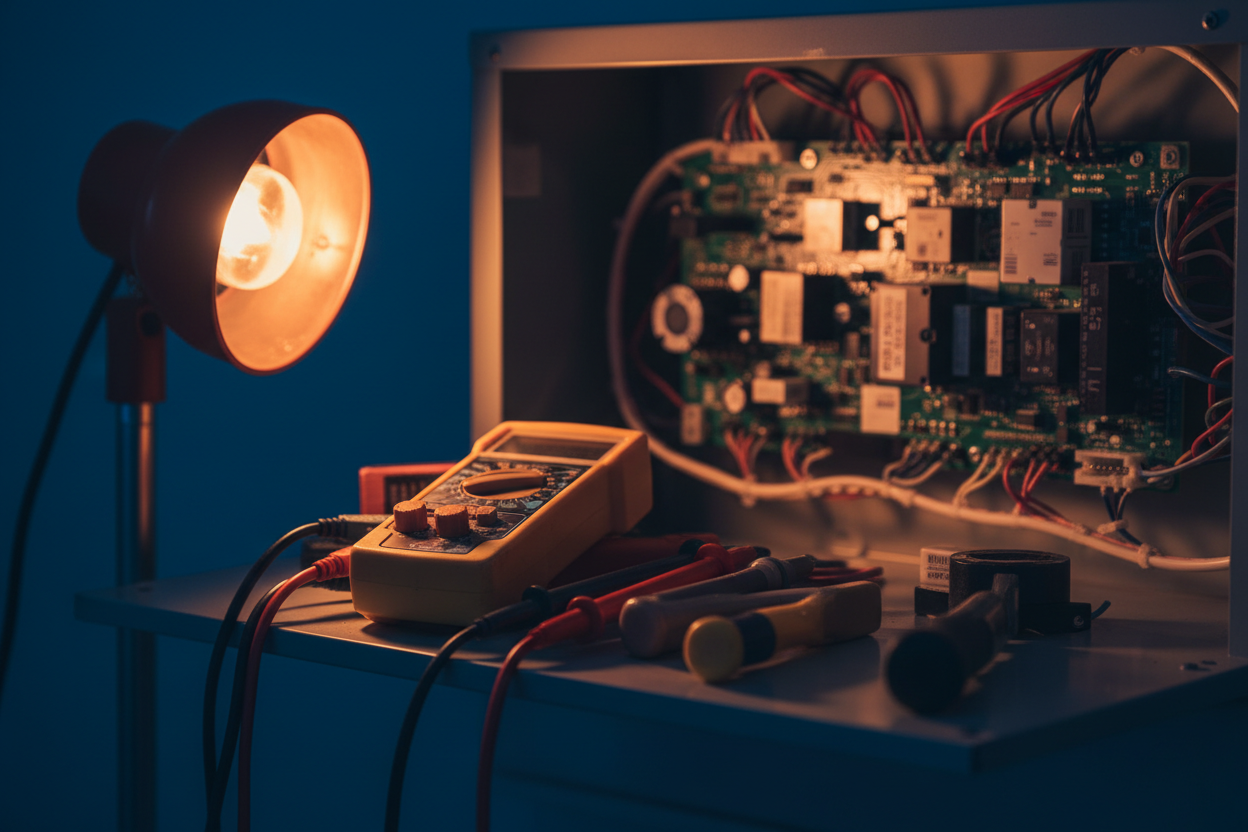
Your HVAC System Is Talking—Are You Listening?
In 80%+ of cases, an HVAC system showed warning signs for weeks or months before breakdown. The difference between a $150 maintenance visit and a $3,000 emergency repair often comes down to catching those signs early.
The 7 Warning Signs of Impending HVAC Failure
1. Rising Energy Bills Without Explanation
15%+ increase year-over-year without rate changes? Common culprits: dirty coils, low refrigerant, failing compressor valves.
2. Unusual Noises
- Screeching/squealing: Worn belt or failing blower motor bearings
- Banging/clanking: Loose or broken internal component
- Hissing: Refrigerant leak
- Buzzing: Electrical issue — contactor, capacitor, or wiring
3. Short Cycling
Turning on/off every 5–10 minutes instead of 15–20 minute cycles indicates a serious problem.
4. Inconsistent Temperatures
Hot and cold spots suggest failing dampers, ductwork issues, or a weakening blower motor.
5. Unusual Odors
- Musty/moldy: Moisture in ductwork or evaporator coil
- Burning plastic: Electrical component overheating
- Rotten eggs: Possible gas leak — leave immediately
The Math: Maintenance vs. Emergency Repair
| Scenario | Cost | Downtime | |---|---|---| | Tune-up catches weak capacitor | $150–$200 | 0 hours | | Capacitor fails → compressor burns out | $2,500–$4,500 | 2–5 days | | Tune-up catches refrigerant leak | $300–$600 | 0 hours | | Leak goes undetected → compressor failure | $3,000–$7,000 | 3–7 days |
Key Takeaways
- 80%+ of HVAC failures are preceded by detectable warning signs
- A $150–200 tune-up can prevent $3,000–$7,000 in emergency repairs
- Capacitor failure is the #1 cause of compressor failure — easily caught during maintenance
- Age + repair frequency is your best predictor of imminent failure
STL Air Pros Maintenance Plans
- Two visits per year (spring cooling tune-up + fall heating tune-up)
- Priority scheduling during peak season
- 15% discount on all repairs
- No overtime charges for after-hours calls
FAQ
Q: How often should I schedule HVAC maintenance in St. Louis? Twice per year — spring before cooling season and fall before heating season.
Q: What does a tune-up actually include? Electrical connection inspection, capacitor testing, refrigerant level check, coil cleaning assessment, blower motor amperage check, drain line clearing, and thermostat calibration.
Q: How do I know if my capacitor is failing? A weak capacitor causes the system to struggle starting, make a humming noise, or trip the breaker. Our technicians test capacitors with a multimeter every visit.
Don't wait for the breakdown. Schedule a maintenance visit or call 314-328-0008.